


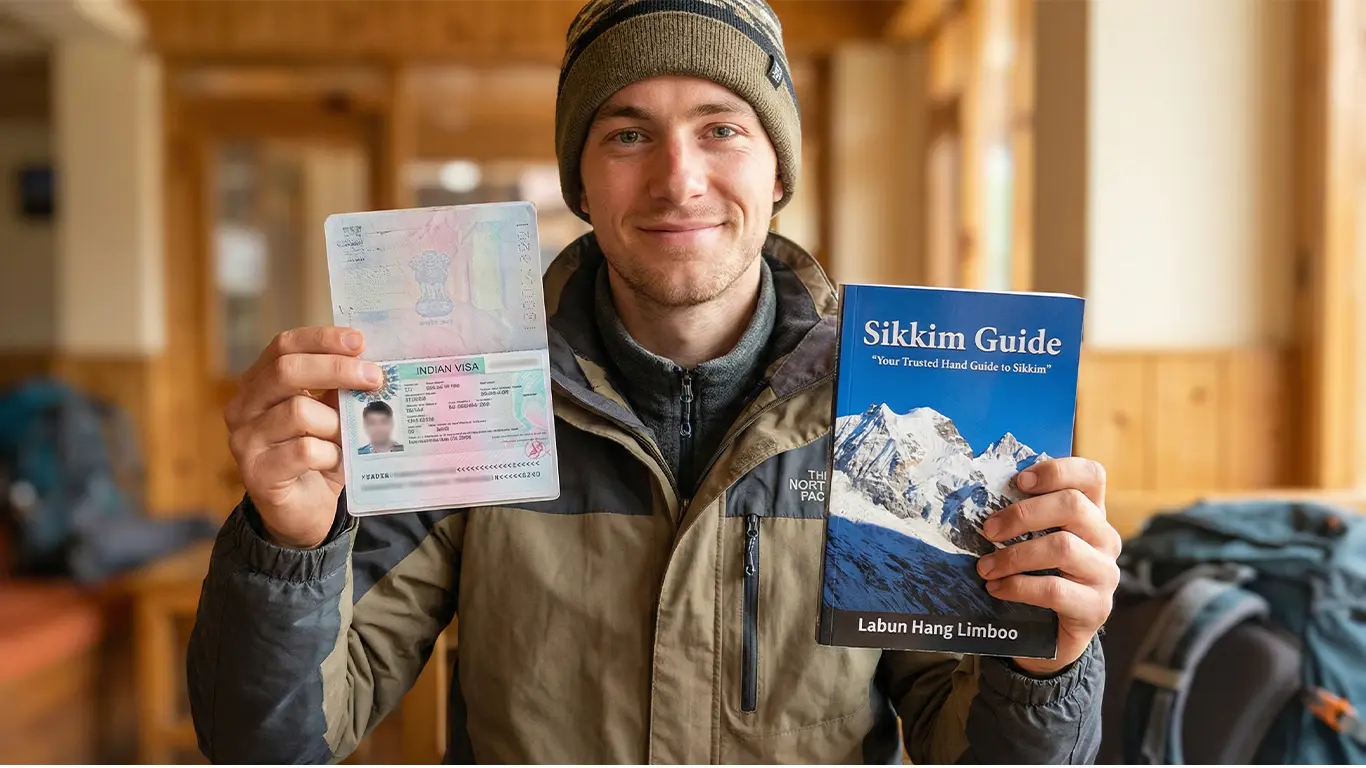
What You Must Know About the Sikkim Permit
Planning a trip to Sikkim sounds straightforward until you realise that half the popular destinations sit inside protected zones, border-sensitive corridors, or national park boundaries. The permit rules change depending on your nationality, the route you pick, and whether you are sightseeing or trekking.
Most travellers figure this out too late, either at a check post or when their operator calls a day before departure asking for documents. This guide breaks down the entire permit system so you can sort everything out well before you pack.
Do You Need a Permit to Visit Sikkim?
If you are an Indian tourist, no. You can visit Gangtok, Pelling, Namchi, Ravangla, and most standard sightseeing circuits in South and West Sikkim without any entry permit. The permit requirement kicks in only when your route enters a protected or border-sensitive area.
If you are a foreign tourist, yes. Every foreign national (except people of Bhutanese origin) needs a Restricted Area Permit (RAP) to enter Sikkim. This applies to the entire state, including Gangtok. On top of that, visiting high-altitude protected sectors like Tsomgo Lake or North Sikkim requires an additional Protected Area Permit (PAP).
Types of Sikkim Permits
There are three permit categories that cover nearly every travel scenario in Sikkim.
Restricted Area Permit (RAP)
This is the mandatory entry permit for all foreign nationals visiting Sikkim. Many travellers still call it the ILP (Inner Line Permit), and both terms are used interchangeably. The standard validity is 30 days, extendable up to 60 days through the Foreigners Registration Office in Gangtok or district police offices in Namchi, Mangan, or Gyalshing. The RAP is free of cost.
Protected Area Permit (PAP)
This is the route-specific permit for destinations near international borders or inside protected zones. Both Indians and foreigners need PAP for routes like Tsomgo, Nathula, Yumthang, Zero Point, Thangu, Gurudongmar, and the Zuluk Silk Route. The PAP is tied to a specific route and number of days. A Tsomgo permit will not work for Yumthang, and vice versa.
Trekking Permit
Major treks in Sikkim pass through national parks and wildlife sanctuaries, so they need a separate forest entry permit. This is handled at the forest check post (Yuksom for the Goechala and Dzongri routes) and involves entry fees, camping charges, and guide formalities.
Where Indians Need Permits
Indian tourists travel freely across most of Sikkim, but the following destinations require a PAP:
- Tsomgo Lake (Changu Lake)
- Baba Mandir
- Nathula Pass
- Yumthang Valley
- Zero Point (Yumesamdong)
- Thangu and Chopta Valley
- Gurudongmar Lake
- Zuluk and the Old Silk Route
- Dzongri, Goechala, and other organised trekking routes
No special permit is needed for Gangtok, Pelling, Namchi, Ravangla, Yuksom town, or standard West and South Sikkim circuits.
Where Foreign Tourists Can and Cannot Go
Foreigners with a valid RAP can visit regular tourism areas across Sikkim, including Gangtok, Pelling, Yuksom, Namchi, Ravangla, and much of the West and South Sikkim circuit.
With an additional PAP, foreigners can visit Tsomgo Lake, Lachen, Lachung, Yumthang Valley, Zero Point, and Thangu. Travel to these protected sectors must be arranged through a registered Sikkim tour operator, and foreigners must travel in a group of two or more.
- Nathula Pass
- Gurudongmar Lake
- Zuluk / Old Silk Route
Documents for Indian Tourists
For protected sightseeing routes like Nathula, North Sikkim, Gurudongmar, and Zuluk, carry the following in physical form:
- Voter ID or Driving Licence (original + photocopy)
- 2 passport-size photographs
- Extra photocopies for operator submission
For children under 18:
- Birth certificate
- Father’s Voter ID or passport
For motorbike riders entering PAP areas:
- Vehicle registration certificate
- Driving licence
- Pollution Under Control certificate
- Insurance certificate
- 2 passport-size photos
- ID proof for rider and pillion
Documents for Foreign Tourists
Foreign tourists should keep both printed copies and digital backups of every document. The complete set includes:
General Documents
- Valid passport (original + 2 photocopies)
- Valid Indian visa (original + photocopy)
- 4 passport-size photographs
- Approved RAP confirmation
- PAP approval (if visiting protected sectors)
- Tour itinerary with dates
- Hotel booking details
- Operator contact information
- Digital scans saved on phone and email
Additional for Trekking
- Trek booking confirmation from your operator
- Medical fitness certificate (required for some protected-area treks)
How Permits Work for Sightseeing
For most Indian tourists, the process is handled entirely by your local tour operator. You send your ID proof and photographs, the operator submits the paperwork to the Tourism Department or police check post, and the permit is cleared before your departure.
East Sikkim (Tsomgo and Nathula)
The Tourism Department issues the main permit. Vehicle clearance comes from the police check post through the operator. Nathula is open to Indians only.
North Sikkim (Yumthang, Zero Point, Thangu, Gurudongmar)
Domestic permits are issued at the police checkpoint. Foreign tourists can visit Lachen, Lachung, Yumthang, and Thangu sectors with PAP through a registered operator. Gurudongmar is closed to foreigners.
Zuluk / Old Silk Route
Open to Indians with PAP. Closed to foreign tourists.
How Permits Work for Trekking
Trekking permits involve a different set of authorities. Most major treks pass through national parks managed by the Forest Department, so the forest entry permit is separate from the tourism-side PAP.
Goechala and Dzongri (West Sikkim)
The practical flow is simple. All trekkers obtain the forest entry permit at the Yuksom check post. Your registered trek operator handles the formalities, including entry fees and camping charges. Foreign trekkers must hold a valid RAP before arriving at Yuksom, must reach Yuksom one day before the scheduled trek date, and must travel in a group of two or more.
The Singalila Trek permit is issued through TIC Pelling after the operator arranges the required clearances.
For foreign trekkers planning Goechala, Dzongri, or any West Sikkim trek:
- Arrive in Sikkim with a valid RAP
- Reach Yuksom one day before the trek start date
- Let the operator complete forest permit formalities
- Carry passport, visa, RAP copy, and trek confirmation at all times on the trail
How to Apply for Sikkim Permits
Indian tourists
In nearly all cases, you apply through a registered Sikkim travel operator. Choose your destination, send the required ID and photographs to the operator, and let them process the permit with the relevant authority. Carry originals on travel day.
Foreign tourists
The permit process changed significantly in January 2026. Sikkim has fully digitised the RAP and PAP system for foreign nationals. Physical permit issuance has been discontinued. Foreign tourists now need to apply through the e-FRRO portal on the IVFRT platform after arriving in India but before entering Sikkim.
The practical workflow looks like this:
- Finalise your itinerary and connect with a registered Sikkim operator
- Prepare passport scans, visa copies, photographs, itinerary, and sponsor details
- Apply for RAP/PAP through the e-FRRO portal (approval typically takes 24 to 48 hours)
- Arrive in Sikkim with all digital and printed approvals
- For trekking, reach Yuksom one day early and let the operator handle the forest permit
Registered local operators can guide you through the e-FRRO process and help with document formatting.
Countries with Restrictions or Prior Clearance
Sikkim applies additional screening for nationals of certain countries. The RAP page on the Sikkim Tourism website is specific about this.
First approval from the Ministry of Home Affairs (MHA) is required for:
- Pakistan
- Afghanistan
- China (including Hong Kong and Macau)
Citizens, nationals, or OCI holders from these countries must get MHA clearance before applying for a RAP.
Prior clearance from MHA or Sikkim Home Department is required for:
- Myanmar
- Nigeria
Individuals with nationality, OCI status, or birthplace linked to Myanmar or Nigeria need clearance before entering the state.
Other nationality-specific notes:
- People of Bhutanese origin are exempt from the RAP requirement
- Citizens of Nepal and Bangladesh may apply using a valid identity card reflecting their origin
- For the Goechala trekking zone specifically, citizens of China, Myanmar, and Bangladesh are not permitted
Practical Tips Before You Travel
Permit problems almost always come down to the same few mistakes: wrong ID, missing photographs, last-minute planning, or confusion about which routes are protected. Here is a checklist to avoid trouble.
Always carry with you:
- Original ID or passport
- 2 to 4 passport-size photos
- Photocopies of every submitted document
- Digital scans on your phone
- Visa copy (foreign nationals)
- Confirmed itinerary with dates
- Hotel booking details
- Operator’s contact number
- Permit copies already issued for your route
Even when your operator has arranged everything, carry your own complete document set. Check posts can ask for originals, and weather-related rerouting sometimes means passing through a different checkpoint than planned.
