
location icon
Gangtok, East Sikkim Middle Syari
Email:
Whatsapp Icon
Whatsapp:

Blog Details

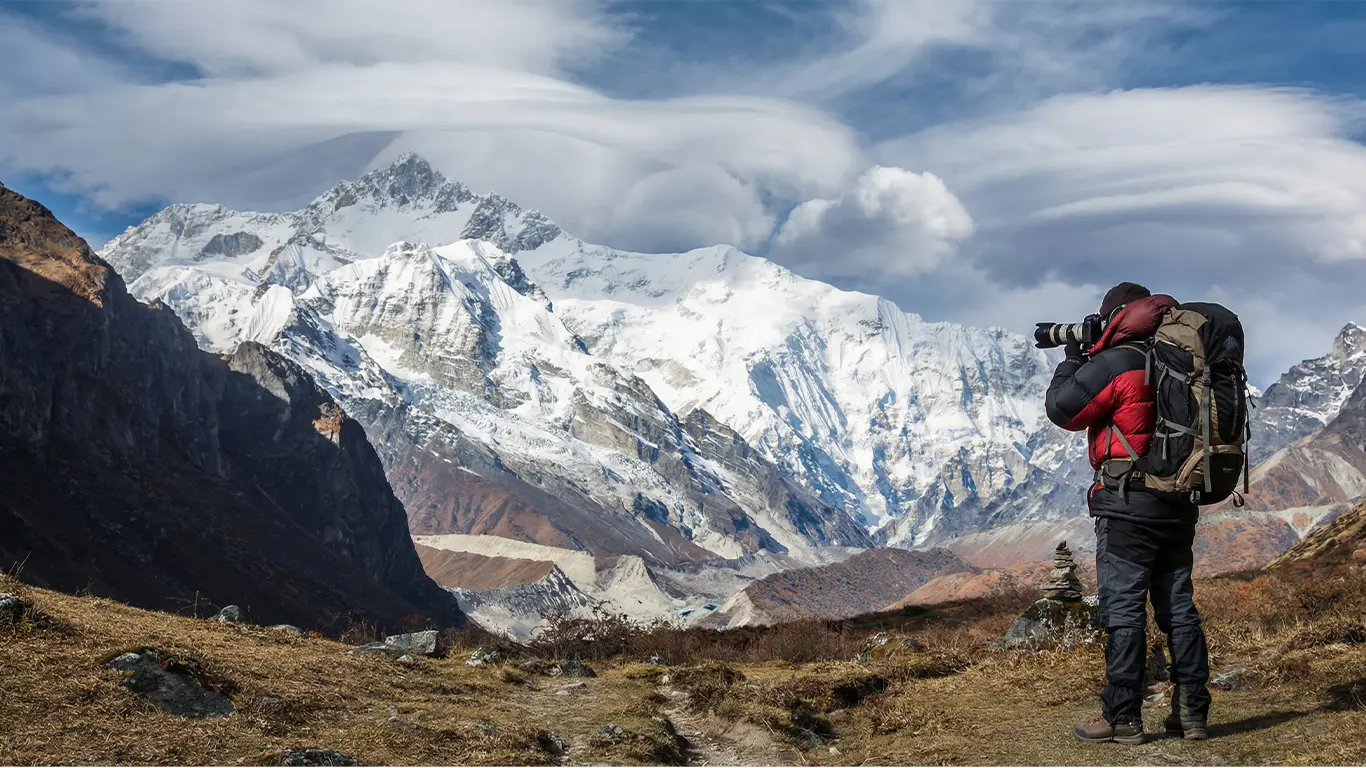
Photographer overlooking Kanchenjunga and Goecha Peak near Lamuney campsite on the Goechala Trek route in Sikkim

Best Time to Visit Sikkim: A Season-by-Season Guide for 2026

Travel Guide 2026

Best Time to Visit Sikkim:
A Season-by-Season Guide

Decoding Sikkim through comprehensive weather patterns, tourist footfall, and seasonal phenomena.

Sikkim does not have a single best time to visit. It has the right time — and that depends entirely on what you are coming for.

Tucked into the Eastern Himalayas and sharing borders with Tibet, Nepal, and Bhutan, this small state offers dramatically different experiences depending on the month you arrive. Get the season wrong and you may spend your trip watching landslides from a stationary vehicle. Get it right and you will see Kanchenjunga — the world’s third highest peak — perfectly framed against a cloudless sky.

This guide cuts through the noise and tells you exactly when to go, based on your priorities.

Quick Season Snapshot

A fast overview to help you align your travel priorities with the right season.

Season 🌸 Spring
Months Mar – May
Verdict Peak season
Best For Blooms, trekking, rafting
Season 🌧️ Monsoon
Months Jun – Sep
Verdict Avoid
Best For Budget stays only
Season 🍂 Autumn
Months Oct – Nov
Verdict Peak season
Best For Mountain views, trekking
Season ❄️ Winter
Months Dec – Feb
Verdict Niche appeal
Best For Snow, festivals, solitude

The Four Seasons of Sikkim

Sikkim’s dramatic shifts in altitude create distinct microclimates. Understanding the four primary seasons is crucial for aligning your expectations with reality.

Spring (Mar – May)

10°C – 22°C

Pleasant & Blooming

Valleys erupt in vibrant colors with blooming rhododendrons and orchids. Skies are mostly clear, making it ideal for sightseeing and early trekking.

Autumn (Mid-Oct – Nov)

15°C – 25°C

Clear & Crisp

The undisputed peak season. Late October to November skies offer the clearest, unobstructed views of Mt. Kanchenjunga after the heavy rains subside.

Winter (Dec – Feb)

0°C – 12°C

Cold & Snowy

Harsh conditions in North Sikkim (often inaccessible), but Gangtok and South/West Sikkim remain clear. Ideal for snow lovers visiting Nathu La or Yumthang.

Monsoon (Jun – Sep)

15°C – 23°C

Wet & Destructive

Heavy rainfall triggers landslides and road blockages. September receives the heaviest, most damaging rainfall, often extending into early October.

The Annual Tourism Matrix

This combination chart reveals the stark correlation between climatic conditions and tourist arrivals. Notice how peak arrivals flawlessly align with the lowest rainfall and moderate temperature brackets.

45%
Annual tourists visit in Autumn
35%
Annual tourists visit in Spring
550mm
Peak monthly rainfall (September)

Spring: blooms and blue skies

March to May is Sikkim at its most vivid. Temperatures across lower and mid-altitude zones sit comfortably between 10°C and 25°C, and the hillsides erupt with rhododendrons, magnolias, and wild orchids. In West Sikkim’s Barsey Rhododendron Sanctuary, entire ridgelines turn crimson and pink — a spectacle that draws botanists, photographers, and casual walkers alike.

This is also the best window for adventure sports. White-water rafting on the Teesta River peaks between March and May, when water levels are moderate and the gorges look their best. Paragliding above Gangtok at spots like Baliman Dara is equally reliable during these months, with stable thermals and good visibility across the valleys.

One note: as May progresses into June, pre-monsoon haze begins to build. Mountain views soften slightly compared to autumn, and by late May the humidity is noticeable. If crisp Himalayan panoramas are your priority, aim for March or April rather than May. Spring is also when the Goecha La trek opens from mid-March, offering a dramatic floral approach to the Kanchenjunga massif before the monsoon shuts everything down.

Autumn: the clearest views

If mountain photography is your purpose, October and November are non-negotiable. After months of heavy monsoon rain, the atmosphere is completely washed clean — no haze, no dust, no moisture. The result is sharp, high-contrast views of the Kanchenjunga range that experienced trekkers describe as razor-clear. This is the season when the famous Sleeping Buddha alignment on the Singalila Ridge becomes fully visible, and when sunrise over the peaks regularly produces images that look almost unreal.

Road conditions stabilise significantly after the monsoon, making travel to North Sikkim considerably safer and more predictable. October and November also coincide with the peak trekking window for several routes, including the Coronation Trek (Rumtek to Yuksom) and the Khangchendzonga Trek to Goecha La.

The trade-off is crowd and cost. Autumn is peak season, which means accommodation fills quickly, taxi operators charge premium rates, and popular spots like Tsomgo Lake get busy. Book at least two to three months in advance.

Activity Compatibility

Different experiences require different climatic conditions. This chart ranks the optimal windows for specific quintessential Sikkim activities.

Visitor Distribution

A clear visualization of crowd density. If you seek solitude, the margins of Winter and the depths of Monsoon offer quiet, albeit challenging, environments.

Monsoon: proceed with caution

June to early September is the season most travel operators quietly advise against. Sikkim receives some of the heaviest rainfall in the Indian Himalayas — Gangtok alone can record up to 3,494 mm annually, with July being the wettest month by a considerable margin. The real danger is not the rain itself but what it triggers.

Landslides across the fragile Himalayan geology regularly block roads for days at a time, particularly on the North Sikkim highway towards Lachen and Lachung. In June 2025, cloudbursts stranded over 1,500 tourists when routes to both towns were severed simultaneously. Mountain views are almost entirely obscured by cloud and fog for weeks at a stretch, and trekking trails become leech-infested — a reality no brochure photographs.

📌 Budget travellers who can tolerate the uncertainty will find significantly reduced hotel rates and near-empty sightseeing spots. Everyone else should plan around the monsoon entirely.

The Monsoon Dilemma

Visiting between June and September is highly debated, with September seeing the most severe and damaging rainfall. Use this decision matrix to determine if a wet-season trip aligns with your travel tolerance.

Can you tolerate flight delays, road blockages, and landslides?
No
Avoid Sikkim. Plan for October or April instead.
Yes
Are you seeking lush green landscapes and fewer crowds?
Proceed with caution. Stay in Gangtok or South Sikkim. Avoid North Sikkim entirely.

Winter: snow and solitude

December to February divides opinion. Lower altitude towns like Gangtok and Pelling remain accessible and relatively mild, with daytime temperatures around 4°C to 10°C. But the high passes — Nathu La, Tsomgo Lake, Yumthang Valley, Lachung — receive heavy snowfall and deliver the dramatic white-landscape experience that draws a growing number of winter visitors.

The challenge is crowds at specific pinch points. In December 2025, over 6,000 tourists descended on the Nathu La–Tsomgo belt in a single day, straining infrastructure and prompting the government to institute vehicle caps and a new tourism sustainability levy. If you are heading to snow viewpoints, go on weekdays and book transport well in advance.

Wildlife enthusiasts with a high tolerance for cold have a compelling reason to visit in winter: snow leopards descend to lower elevations as their prey migrates downhill, increasing the probability of a sighting in North Sikkim’s high-altitude zones. It is still far from guaranteed, but winter is the best window available.

For the genuinely daring, December also opens a compelling trekking window on the Dzongri trail in West Sikkim. The route from Yuksom to Dzongri (3,870m) stays accessible even in deep winter, and the rewards are considerable — unobstructed, 360-degree views of the Kanchenjunga massif under snowfall, frozen rhododendron forests, and near-total solitude on a trail that teems with trekkers in spring and autumn. Temperatures at Dzongri drop well below zero at night, and snowpack on the upper sections demands proper gear, acclimatisation, and an experienced local guide. This is not a trail for casual walkers in December — but for those prepared for it, the winter Dzongri experience is unlike anything the same route offers in the warmer months. For a full breakdown of what to bring for winter conditions, see our Sikkim packing guide.

2026 festival dates

Sikkim is one of the few places in India where Buddhist monasteries, Hindu temples, and indigenous animist shrines sit within walking distance of each other — and all of them celebrate. The state’s festival calendar is genuinely multi-community: Nepali Hindu, Bhutia, Lepcha, Limbu, Tamang, and Rai traditions each have their own anchors in the year. What follows covers the key festivals by season, across communities.

January

Maghe Sankranti & Jorethang Mela · 14-22 January 2026 (festival day: 14 January)
One of the biggest cross-community celebrations in Sikkim, Maghe Sankranti marks the sun’s entry into Capricorn and the symbolic end of winter. Families gather to eat yams, sweet potatoes, sesame sweets, and ghee — foods believed to warm the body against the cold. The highlight for visitors is the Jorethang Maghe Mela in South Sikkim, now in its 71st year, running from 14 to 22 January 2026 at Jorethang Nayabazar on the banks of the Rangit. Thousands take a holy dip at the Teesta-Rangit confluence, while the fairgrounds fill with handicraft stalls, folk dance competitions, archery, river rafting, and football. It draws people from Darjeeling, Kalimpong, and Siliguri and is one of the most genuinely festive events on the Sikkimese calendar.

February

Losar — Tibetan New Year · 18 February 2026
The Year of the Fire Horse begins with elaborate butter sculptures crafted by monks, fresh prayer flags strung across mountainsides, and communal celebrations at monasteries statewide. Bhutia communities celebrate with family gatherings, new clothes, and feasts of traditional food.

May

Saga Dawa · 17-31 May 2026 (main day: 31 May)
The holiest occasion in Tibetan Buddhism, commemorating the birth, enlightenment, and parinirvana of the Buddha. Grand processions and the unveiling of massive Thangkas take place at Rumtek Monastery and Tsuklakhang Palace. The entire month is treated as a period of heightened merit — even non-Buddhists pause to watch the candlelit processions wind through Gangtok’s streets.

October

Dussehra / Dasain (Durga Puja) · October 2026 (dates vary with the lunar calendar)
The largest Hindu festival in Sikkim, observed primarily by the Nepali community which makes up the majority of the state’s population. Goddess Durga is worshipped over nine days. On the tenth day — Vijaya Dashami — elders apply tika on the foreheads of younger family members and offer blessings and gifts. Families reunite across the state, and the mood across towns like Namchi and Gyalshing is unmistakably festive.

October – November

Tihar (Diwali) · October / November 2026
Known as Tihar in Sikkim, this five-day festival of lights is celebrated with enormous enthusiasm by the Nepali Hindu community and widely observed across the state. Each day honours a different animal — crows, dogs, cows — before Laxmi Puja on the third night, when homes and streets are lit with oil lamps. The distinctive tradition here is Deusi-Bhailo: groups of young men and women go door to door singing folk songs, receiving food and money in return. The sound of Deusi-Bhailo echoing through hillside neighbourhoods at night is one of Sikkim’s most memorable experiences for visitors arriving in late October or November.

Pang Lhabsol · August / September 2026 (15th day of the 7th lunar month)
Unique to Sikkim, this festival venerates Mount Kanchenjunga as the state’s guardian deity. The warrior sword dance known as Pangtoed Chham is performed by Lamas at Tsuklakhang Monastery. Pang Lhabsol’s exact 2026 Gregorian date is determined by the Tibetan lunar calendar.

November – December

Chasok Tongnam — Limbu Harvest Festival · November / December 2026 (full moon of Mangsir month)
The most important festival of the Limbu (Tsong Limboo) people, one of Sikkim’s recognised indigenous tribes. Chasok Tongnam is a thanksgiving celebration rooted in the Mundhum — the Limbu oral scripture — in which the first harvested grains, cereals, and fruits are offered to Yuma Sammang, the supreme ancestral goddess, before the community partakes in them. Rituals are conducted by Phedangma shamans acting as intermediaries between the mortal and spiritual realms. The Sikkim government has declared Chasok Tongnam a gazetted holiday. The state-level celebration — held at Saramsa Garden, Ranipool — draws Limbu communities from across Sikkim, Darjeeling, Nepal, and the diaspora, and features a museum of traditional artefacts, folk dances, and communal feasting.

Bali Hang Tongnam · November 2026 (Amavasya / new moon of Mangsir month)
One of the most significant festivals of the Limbu community, Bali Hang Tongnam is rooted in the mythology of Balihang — a beloved king whose people kept him alive through the darkest night by lighting lamps and praying to delay sunset and hasten dawn. The festival unfolds in two parts: Laringek at dusk and Namlingek at sunrise. Communities gather for traditional Limbu dances, share the ceremonial Khareng (selroti), and strengthen kinship ties. It runs close to Tihar in the calendar, and the two festivals together create a sustained period of festivity felt right across communities.

Loosong / Namsoong · December 2026
The traditional Sikkimese new year for the Bhutia community marks the end of harvest with archery competitions and chaam dances. Best experienced in rural areas and smaller monasteries away from Gangtok.

The government also runs secular winter events worth noting: the Cherry Tea Festival at Temi Tea Garden in November, and the Red Panda Winter Festival and Gangtok Food and Culture Festival in December–January. These are worth building an itinerary around if you are visiting in the off-season.

Travel costs by season

Sikkim’s transport runs on a taxi syndicate model — Uber and Ola do not operate here — which means pricing is driven by seasonal demand rather than an algorithm. During peak spring and autumn, the gap between tourist arrivals and available vehicles gives operators considerable leverage. A reserved SUV for a three-day North Sikkim package can cost between ₹18,000 and ₹22,000 during peak season, compared to significantly lower rates in off-peak months. Budget travellers can reduce costs considerably by opting for shared cabs on fixed routes. A shared seat from Bagdogra Airport to Gangtok typically runs ₹200 to ₹600, though you will need to wait for the vehicle to fill before departing.

Hotel tariffs follow the same seasonal curve. Off-season discounts in the monsoon and early winter are real and significant, but weigh the savings carefully against the high probability of weather-disrupted itineraries and road closures. The smarter move for most travellers is to book two to three months ahead for peak season, rather than gamble on a cheaper monsoon trip. All permit requirements — including the January 2026 digital-only mandate for foreign nationals via e-FRRO — are covered in our dedicated Sikkim permits guide.

Final Verdict & Regional Highlights

  • North Sikkim (Lachen, Lachung): Highly susceptible to extreme weather. Best visited strictly in March-May or October-November.
  • East Sikkim (Gangtok, Nathula): Gangtok is a year-round destination, but Nathula Pass often closes in deep winter (Jan-Feb) due to heavy snow.
  • West Sikkim (Pelling): The ultimate destination for Kanchenjunga views. Clear skies are mandatory, making Autumn (Oct-Nov) the absolute best time.
  • South Sikkim (Namchi): Lower altitude means milder winters and warmer summers. Pleasant from February to May and September to December.

Three takeaways

  1. Autumn (October–November) offers the clearest mountain views and most stable trekking and road conditions. It is the best all-round season for the majority of visitors.
  2. Spring (March–May) rivals autumn for trekking and adds rhododendron blooms and adventure sports, but haze builds from late May and the monsoon follows quickly.
  3. Avoid the monsoon (June–early September) unless you have a very high tolerance for itinerary disruption — landslides, road closures, and zero mountain visibility are the norm, not the exception.

Data visualizations created based on aggregated tourism patterns, historical weather data, and geographical constraints of the Sikkim Himalayan region.

Leave A Comment

Your email address will not be published. Required fields are marked *